Keynote Session
From science to policy: how to shape the future of indoor air
To control a complex system, understanding it is fundamental. In recent decades, the scientific understanding of every aspect of the building-person-environment system has expanded enormously thanks to the interdisciplinary efforts of experts from all scientific, engineering, public health, and related practice disciplines.
However, understanding alone is not enough to guarantee the optimal functioning of a complex system. It is necessary to monitor its performance and use this information to continuously adjust it to changing external and internal conditions, human needs, and energy demands.
With the advent of generative AI in the design and operation of buildings, it is now possible to consider a wide range of design and usage options, taking into account climate projections, regulatory requirements, material characteristics, and local conditions.
Ultimately, however, unless this knowledge is accepted and its use is protected by building design and performance regulations, society will benefit little from it. The future of indoor air quality lies in the societal recognition that it is a necessity and in the political will to act accordingly.
Biography
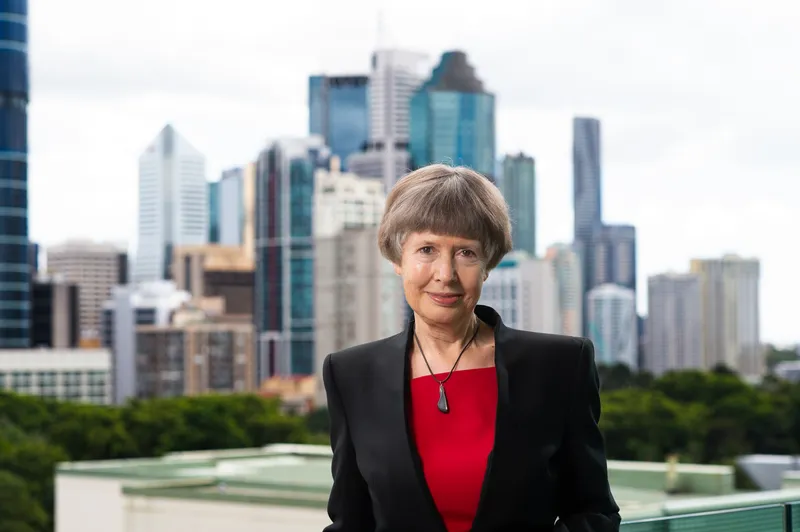
Distinguished Professor Lidia Morawska is a leading expert in air quality and its impact on human health and the environment, with a particular focus on the science of airborne particulate matter. She is Distinguished Professor at the Queensland University of Technology (QUT), Brisbane, Australia, and Director of the International Laboratory for Air Quality and Health at QUT, a World Health Organization (WHO) Collaborating Centre for research and training in air quality and health. She also serves as Centre Director for the ARC Training Centre for Advanced Building Systems Against Airborne Infection Transmission (THRIVE) hosted at QUT.
Professor Morawska holds additional positions as Vice-Chancellor Fellow at the Global Centre for Clean Air Research (GCARE), University of Surrey, UK, and Adjunct Professor at the Institute for Environmental and Climate Research (ECI), Jinan University, Guangzhou, China.
A physicist by training, she received her doctorate from Jagiellonian University, Krakow, Poland. She has authored over 1,100 journal papers, book chapters, and refereed conference papers. At the executive level, she has contributed to numerous national and international professional bodies and currently acts as an advisor to the WHO. She is a Member of the American Academy of Arts and Sciences, a Fellow of the Australian Academy of Science, and a Fellow of the Academy of Technological Sciences and Engineering.
Professor Morawska has received numerous awards, including inclusion in the 2021 TIME100 list of the world's most influential people and the L'Oréal-UNESCO For Women in Science International Award, recognised "for her excellent research in air pollution and its impact on human health and the environment, with a focus on atmospheric particulate matter, and for translating fundamental science into real-world policy and practice to provide clean air for all.


















Social Programme Details